

Table of Contents
The most profitable SaaS business model in 2026 is transforming how companies grow and scale globally. In 2026, the digital economy is moving faster than ever—and one business model continues to dominate across industries: Software as a Service (SaaS). From startups to global enterprises, SaaS has proven to be the most profitable, scalable, and sustainable business model in today’s market.
But why is SaaS so powerful? And how can you take advantage of it?
This guide explains everything in a clear, human way—so you can understand, apply, and even start your own SaaS business.
Benefits of the Most Profitable SaaS Business Model 2026
What is SaaS?
SaaS (Software as a Service) is a cloud-based model where users access software through the internet and pay a subscription fee (monthly or yearly) instead of buying it once.
Instead of installing software, users simply log in online.
Examples of SaaS:
- Shopify (eCommerce platform)
- Zoom (communication platform)
- Canva (design platform)
Why SaaS is the Most Profitable Business Model in 2026
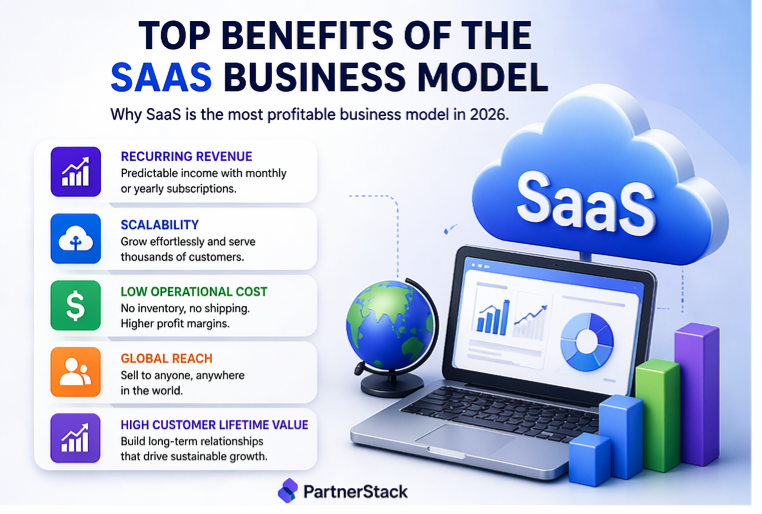
1. Recurring Revenue Model
SaaS businesses generate predictable monthly or yearly income.
- Stable cash flow
- Easier financial planning
- Long-term growth
👉 Example: 1,000 users × $10/month = $10,000 recurring income
2. High Profit Margins
Once your software is built:
- No inventory
- No shipping
- Minimal operational costs
👉 Many SaaS businesses achieve 70–90% profit margins
3. Unlimited Scalability
SaaS can grow without limits:
- Serve users globally
- No physical restrictions
- Automation handles growth
👉 A small team can scale to thousands of customers.
4. High Customer Lifetime Value (LTV)
Instead of one-time sales, SaaS focuses on long-term relationships.
- Customers stay longer
- More revenue per user
- Stronger brand loyalty
5. Strong Investor Interest
SaaS attracts investors because of:
- Predictable revenue
- Measurable growth
- High valuation potential
Key SaaS Metrics That Drive Profitability
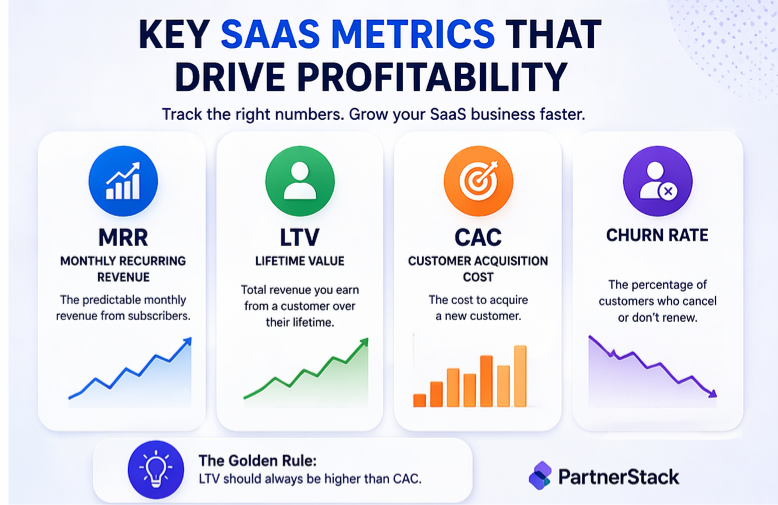
To succeed in SaaS, you must track these key metrics:
- MRR (Monthly Recurring Revenue) – Your consistent income
- LTV (Customer Lifetime Value) – Total revenue per customer
- CAC (Customer Acquisition Cost) – Cost to acquire a user
- Churn Rate – Percentage of users who leave
👉 Golden Rule:
LTV should always be higher than CAC
Real-World SaaS Examples
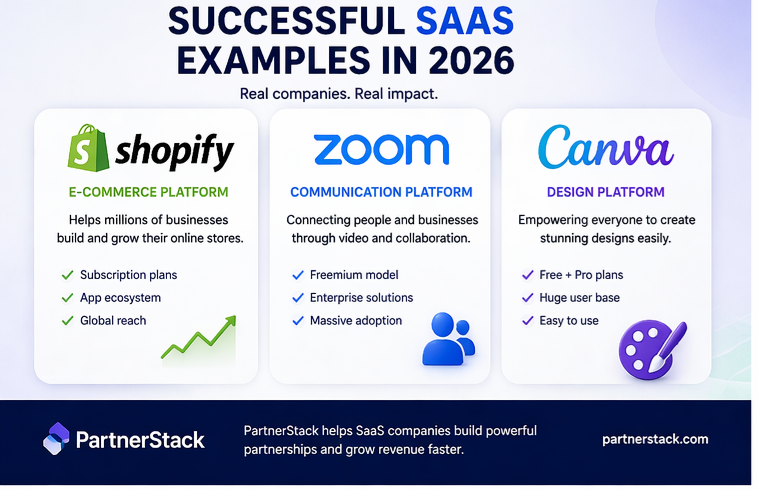
Shopify
- Helps businesses create online stores
- Subscription-based model
- Global reach
Zoom
- Video communication platform
- Freemium + paid plans
- Massive user adoption
Canva
- Easy design platform
- Free and premium plans
- Huge global user base
Why Demand for SaaS is Growing in 2026
The demand for SaaS is exploding due to:
6g technology explained future mobile devices
- Remote work and digital transformation
- Businesses moving to cloud systems
- Automation and AI tools
👉 Today, almost every business depends on software to operate.
SaaS vs Traditional Business Model
| Feature | SaaS Model | Traditional Model |
|---|---|---|
| Revenue | Recurring | One-time |
| Scalability | High | Limited |
| Costs | Low after setup | High ongoing |
| Global Reach | Worldwide | Limited |
| Profit Margins | High (70–90%) | Moderate |
How to Start a SaaS Business in 2026
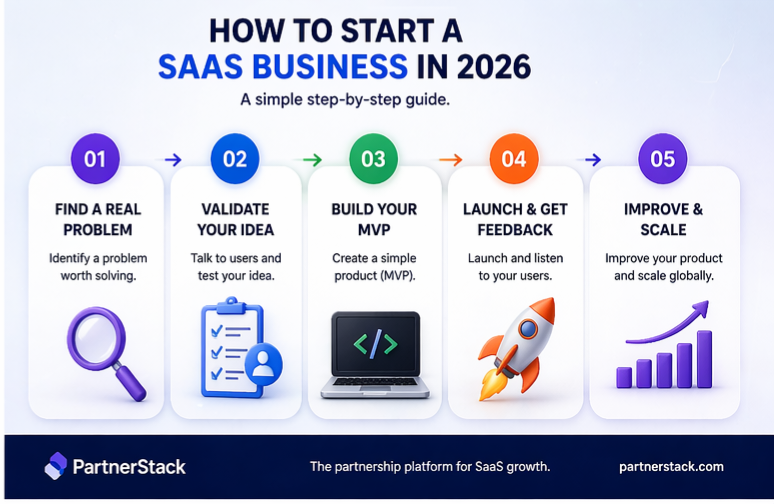
- Identify a real problem
- Validate your idea with users
- Build a simple MVP (Minimum Viable Product)
- Launch and collect feedback
- Improve and scale
👉 Focus on solving a real problem, not just building software.
Benefits of SaaS Business Model
- Recurring income
- Global audience
- High scalability
- Low operational cost
- Long-term growth
Challenges of SaaS (Honest Insight)
- High initial development cost
- Strong competition
- Customer retention (churn)
- Continuous updates required
👉 Solution: Deliver real value and keep improving your product.
FAQ (Frequently Asked Questions)
1. What makes SaaS more profitable than traditional businesses?
SaaS is more profitable because it generates recurring revenue, has low operational costs, and offers high scalability. (the transformative power of it)
2. Is SaaS still profitable in 2026?
Yes, SaaS is one of the most profitable business models in 2026 due to increasing demand for cloud-based solutions and digital tools.
3. How much does it cost to start a SaaS business?
It depends on the complexity, but you can start with an MVP (Minimum Viable Product) to reduce initial costs.
4. What is the biggest challenge in SaaS?
The biggest challenge is customer retention (churn). Keeping users engaged is key to long-term success.
5. Can beginners start a SaaS business?
Yes, beginners can start SaaS by focusing on a specific problem, validating ideas, and starting small.
6. What are the most important SaaS metrics?
The key metrics are:
- MRR
- LTV
- CAC
- Churn Rate
Conclusion
SaaS is not just a trend—it is the future of business in 2026 and beyond.
With its:
- Recurring revenue
- High profit margins
- Global scalability
- Strong demand
SaaS stands out as the Most Profitable SaaS Business Model 2026.
If you’re serious about building a modern, scalable, and high-income business, SaaS is one of the smartest paths you can take.
Start small, solve real problems, Most Profitable SaaS Business Model 2026 and grow consistently—the opportunity is bigger than ever.